


 616281181


For Dr. Tomasz Piontek of the Rehasport Clinic, clinical work in the office or operating room is only part of his professional life. The other half is focused on scientific development — discovering new surgical techniques, conducting training sessions, and participating in seminars and conferences.
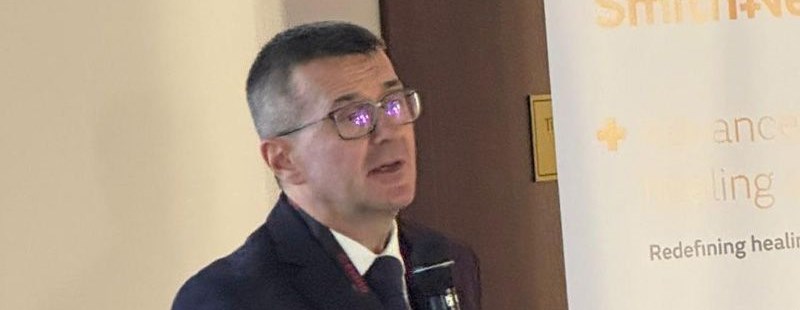
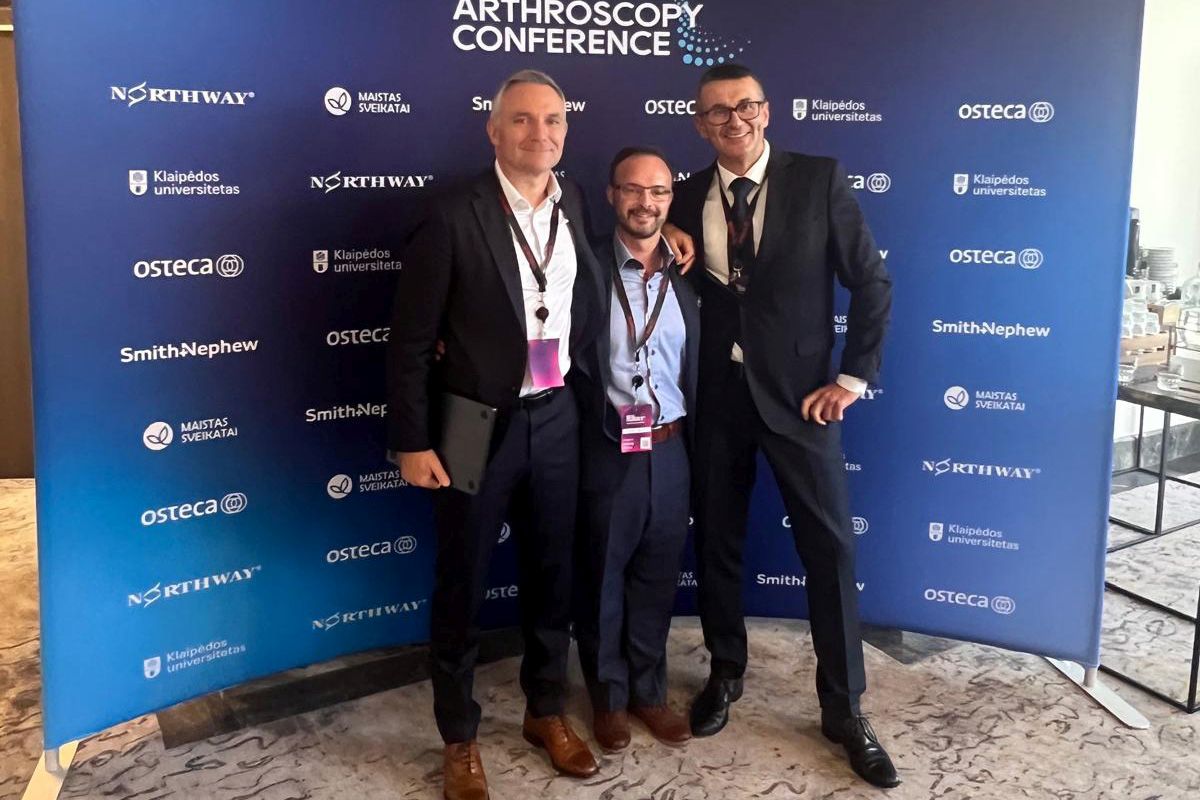
In recent weeks, his journey took him first to Klaipeda, where he took part in the Baltic Arthroscopy Conference, this time focused on knee and shoulder injuries, organized by Dr. Markas Fiodorovas and Dr. Gintautas Pocius. There, Dr. Piontek served as moderator for the “Knee Cadaver Pre-Course” panel, while Dr. Maciej Pawlak from Rehasport Gdańsk played a similar role in discussions on shoulder instability.
Meniscus injuries discussed in Catania: When is it too late to save the meniscus?
From Lithuania, Dr. Piontek traveled south to Italy — to Catania, for the 7th ICRS Summit Catania 2024.
"This symposium is dedicated to topics such as cartilage reconstruction, joint regeneration, and injury prevention. Among specialists, we ask: how far can we go in treating the knee, and where is the point of no return? That point comes when the meniscus is removed," said the Poznań-based orthopedic surgeon, who openly identifies as one of the world's most vocal advocates for preserving the “natural knee” for as long as possible.
“I try to demonstrate that we can apply increasingly advanced techniques to treat chronic injuries. Even when a meniscus is theoretically ‘beyond saving,’ there’s still the potential to regenerate or repair it,” he explained.
AMMR: Biological support and meniscus preservation
Dr. Piontek elaborated: “It’s worth regenerating the meniscus, not just with biological assistance. The goal is to get the tissue to heal — meaning there must still be some healthy, living parts, even if torn. That’s the purpose of our AMMR technique, which uses a collagen membrane. At the Catania summit, we discussed modulating the autoimmune response to promote repair, rather than triggering additional inflammatory processes.”
Henning’s method rediscovered — modernized and enhanced
The Rehasport specialist also presented the first results of using the Henning technique — which he has already published in a scientific journal.
“I showed that we can reinforce the meniscus using autografts — that is, the patient’s own tissue, such as the iliotibial (IT) band. I presented three different ways this band can be used to restore meniscal volume in chronic injuries. Thirty years ago, American professor Charles E. Henning introduced the idea of wrapping the meniscus with the IT band, but it was forgotten. I’ve essentially revived and modernized it as part of my own technique.”
Berlin: Orthopedic surgeons from around the world — strong interest from Asia in Polish innovation
Why can applying a small fragment of the IT band as a patch to the meniscus be so beneficial?
“If we see a young patient whose meniscus is difficult to repair due to a missing portion — but who still has good cartilage, correct alignment, and a stable knee — we should fight for it. Removing the meniscus in young people quickly becomes a serious problem,” emphasized Dr. Piontek.
Publications on these new surgical techniques are already in development.
After Catania, Dr. Piontek traveled to Berlin to participate in the International Knee Days conference, organized by renowned German orthopedic surgeons: Wolf Petersen, Sven Scheffler, Thomas Stoffel, and Thore Zantop.
“I presented the same technique here because I believe it deserves global recognition. I gave a presentation to a distinguished international audience, and shortly afterward, a doctor from China approached me — they’re interested in inviting me to their country to explore this approach. Then I spoke with a doctor from India, who had previously interned at our clinic. His country is also advancing rapidly in medicine — just like South Korea and Japan. The Far East is pushing hard toward innovation,” said Dr. Tomasz Piontek.

