
 616281181


What is Functional Training?
Many individuals looking to strengthen their bodies and prepare for sports—whether recreational, amateur, or sometimes professional—make a fundamental mistake. During strength training, they often mimic traditional bodybuilding methods, focusing on specific muscles or muscle groups. For example, they work on the "chest," biceps, abs, "lats," or calves. These exercises typically aim to isolate particular muscle groups, targeting specific areas in separate sessions. Movements are often reduced to a single plane, and limb movement is isolated to a single joint. Such workouts frequently rely on supports, benches, or seats designed to stabilize the torso or body, enabling the lifting of heavier weights. Machines with fixed movement paths are commonly used to provide additional stability.
This type of training is widely practiced, as evidenced by visiting any fitness club. It stems from decades of bodybuilding traditions, deeply ingrained as the main—if not the only—method for recreational strength development. Fitness clubs also prefer this approach since machines allow clients to perform exercises safely and independently without requiring extensive knowledge, skills, or supervision.
However, traditional bodybuilding-inspired strength training has significant limitations, making it unsuitable for developing the motor skills needed for sports. Bodybuilding focuses on achieving a specific aesthetic—primarily through muscle hypertrophy—while sports training emphasizes efficient body function during complex, multi-planar movements requiring precise control.
Negative Effects of Bodybuilding-Inspired Strength Training:
- Non-functional strength: Strength that cannot be applied effectively in sports or daily activities. Strength is useless without control.
- Muscle imbalances: Both between muscle groups and laterally.
- Lack of coordination: Poor integration of movements.
- Weak core muscles: Impaired ability to transfer force between upper and lower limbs or from the torso to the limbs.
- Poor core stability: Compromised stability in the limbs as well.
- Reduced muscular endurance: Long rest periods between sets lead to diminished endurance.
- Impaired proprioception: A decline in deep sensory awareness.
- Lack of movement dynamism: Training at a slow pace results in slower movement capabilities ("train slow, be slow").
- Injury risk: Attempts at complex, multi-planar movements without proper adaptation increase the likelihood of injuries.
Even bodybuilders acknowledge the disconnect between their training and athletic performance. Milos Sarcev, a world-renowned bodybuilder, candidly admitted, “Bodybuilders are not athletes. They are just mannequins for athletes.”
Functional Training
Functional training offers a more effective approach to strength development. In most sports, including popular disciplines such as alpine skiing, cross-country skiing, tennis, cycling, windsurfing, kitesurfing, rock climbing, skating, and ice skating, achieving a certain level of motor skills—such as strength, muscular endurance, coordination, power, and body control—is essential. Functional training ensures these skills are developed in a way that transfers effectively to sport-specific movements.
Key Aspects of Functional Training:
- Goal-oriented focus: Functional training is not about aesthetics or appearance but optimally and effectively preparing the body for specific sports or improving overall motor skills.
- Integrated movements: Combines upper limb, lower limb, and torso movements across all three planes of motion simultaneously.
- Movement over muscles: Focuses on performing complex movements rather than isolating specific muscles. The brain controls movements, not individual muscles!
- Force transfer: Develops the ability to transfer force effectively between the upper and lower body.
- Adaptability to unstable environments: Enhances strength application in dynamic, unstable conditions (e.g., skiing, boarding, cycling, skating).
- Muscular endurance: Improves both endurance and overall fitness.
- Body composition: Reduces fat mass and develops musculature, following the principle that "form follows function." Athletes often naturally achieve a better physique as a byproduct of their functional training.
- Injury prevention: Strengthens the entire body in natural conditions to prevent acute and chronic sports-related injuries.
Methods Used in Functional Training:
- Complex, multi-planar exercises: Incorporates free weights or body resistance to engage multiple muscle groups simultaneously.
- Minimization of isolated exercises: Particularly avoids machine-based isolation. More exercises are performed standing rather than seated or lying down, engaging stabilizing muscles more effectively.
- Rotational and diagonal torso movements: Emphasizes dynamic core rotation.
- Asymmetric and unilateral exercises: Encourages balanced strength development.
- Proprioception and balance improvement: Uses exercises that challenge balance.
- Speed and explosive movements: Includes high-speed, ballistic exercises.
- High intensity: Features very short rest intervals and circuit training methods.
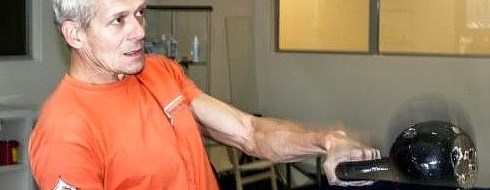
Functional training typically avoids machines, favoring specialized equipment that allows for complex, explosive movements with parameter tracking. Non-conventional tools such as thick ropes, sandbags, balance platforms, weighted vests, suspension straps, kettlebells, medicine balls, sleds, and heavy tires are often used.
Applications of Functional Training
Due to its utility, functional training is widely used to develop general strength and muscular endurance in athletes across various sports, including board sports, alpine skiing, team sports, martial arts, athletics, and more. Its versatility and effectiveness make it a foundational element of general fitness training for elite special forces units (e.g., SWAT).
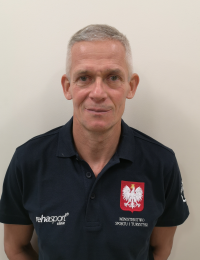
Functional Training with Mariusz Goliński at Rehasport (Ergo Arena, Gdańsk)
If you want to comprehensively prepare for your favorite sport or improve your body’s motor skills effectively, join individual sessions tailored to your needs or small group classes.
Participants do not need to have high levels of fitness or performance. However, they should be ready for regular, intensive effort and progressively increasing loads.
Recommended frequency for optimal improvement of motor skills: 3 times per week.