

 616281181



On the one hand, high volumes, especially of running training, may contribute to an increased risk of overload injuries, while on the other hand, the benefits of high-intensity interval training (HIIT) are well known. The study involved 16 triathletes who had not previously implemented HIIT training in their preparation. They were randomly divided into two groups - one continued their previous training (average running volume of about 34 km / week), while the other group began to implement high-intensity interval training at a reduced volume to about 10 km / week. Swimming and cycling workouts were left unchanged in both groups. It was hypothesized that the HIIT training group would improve their performance to a greater extent than the control group.
Running workouts in the experimental group consisted exclusively of repetitions of sprint running over distances ranging from 100 to about 400 meters, at speeds above that at maximum oxygen uptake (100-130% VVO2max), as well as (in weeks 3-5) 30-second sprints at maximum speed (4 or 6 x 30s. x 3min.).
Before and after the intervention, the athletes' performance was checked by a control start on a simulated triathlon sprint distance (750 m. swim, 20 km. bike ride and 5 km. run) during which heart rate, RPE (rate of perceived exertion) and blood lactate levels were monitored (1 min. after the end of the trial). Shift times were completely excluded from time measurement.
In addition, before and after the training intervention, the height of the counter-jump and half-jump were also measured in both groups, as a result of neuro-muscular adaptation.
Figure 1.
The time to complete each competition of the sprint distance triathlon in both groups before (black bars) and after (gray bars) the 5-week intervention.
In the experimental group, swimming times decreased by 3%, and running distance times decreased by 4%. Times in the control group did not change.
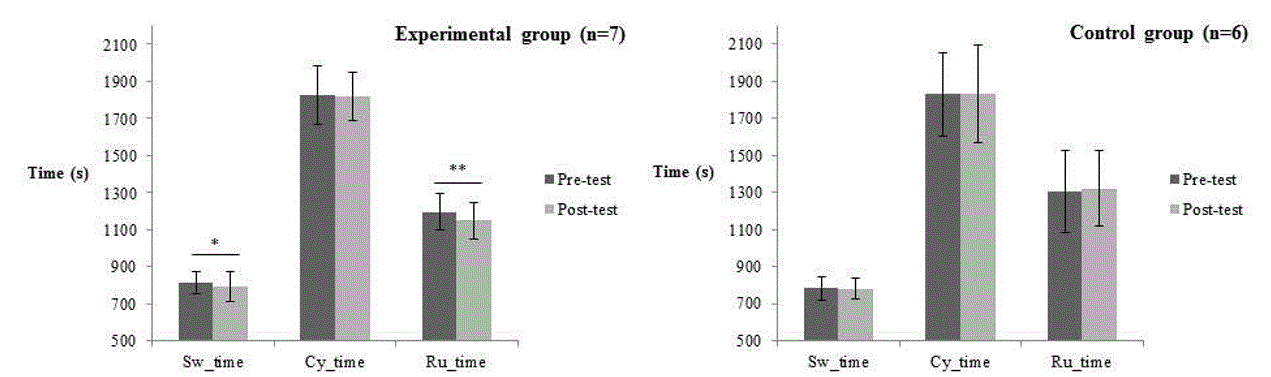
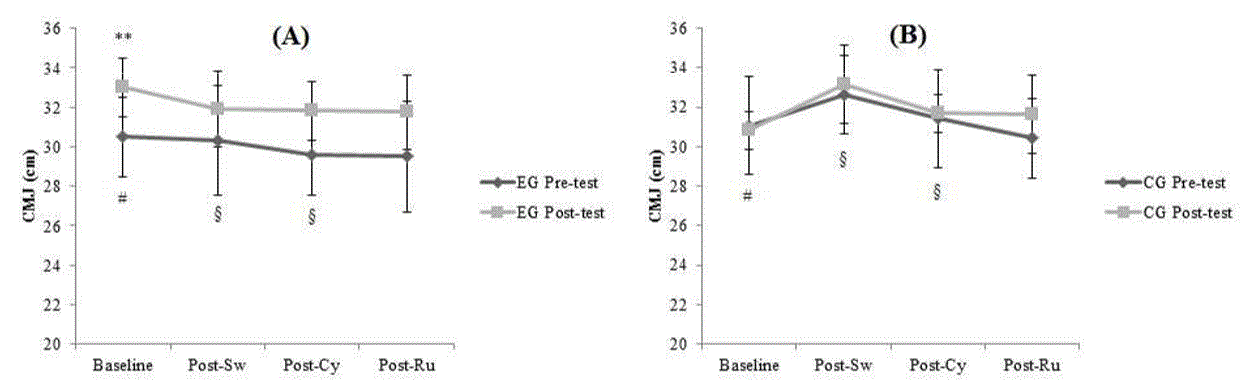
Figure 2.
Countermovement height in the experimental (A) and control (B) groups before the intervention (black lines) and after the intervention (gray lines) measured separately and during the control triathlon, after the completion of each competition. The experimental group improved this parameter by more than 9% as a result of the intervention, while it remained unchanged in the control group, and even worsened (by 3%) when measured after the triathlon.
The main conclusion of the study is the finding of significant improvements in neuro-muscular abilities and also improved performance in simulated competition after a 5-week change from running training to high-intensity interval training with significantly reduced volume. At the same time, there were no significant differences in physiological response (HR, lactate), and perception of exertion severity (RPE) between the pre- and post-intervention groups, suggesting an improvement in the economy of effort in the experimental group after the training intervention (the ability to complete the triathlon faster at the same physiological cost as before the intervention). The exact mechanism for why this happens is not completely understood, according to the authors.
Source:
„A HIIT-based running plan improves athletic performance by improving muscle power.”
Felipe García-Pinillos, Jose C. Cámara-Pérez, Víctor M. Soto Hermoso, Pedro Á. Latorre-Román
Journal of Strength and Conditioning Research
DOI: 10.1519/JSC.0000000000001473
Comment:
When the Spanish do this kind of research, it's worth at least reflecting on the results, as the current ITU World Triathlon Series ranking has as many as three athletes from the country in the top eight (including Javier Gomez Noya, who leads the ranking).
The athletes studied were not among the world's best (as evidenced by the times obtained during the study) and the results, while interesting, raise further questions: - if five intervention weeks increased swimming and, more so, running performance, does that mean the athletes should permanently train cross-country in this manner? Such a positive response may simply be due to the introduction of a new training stimulus. This is often a weakness of most studies, in which a training stimulus new to the subjects was introduced for a period of several weeks. In such situations, an initial spike in performance is often observed, but followed by a period of stagnation.
The effect of the altered training intervention was tested in a somewhat artificial way (swimming in a swimming pool, riding on a bicycle trainer) and on “amateur” equipment (the trainer used for the Tacx Vortex bike has an acceptable measurement error of as much as 10%) and on a distance halved to the Olympic distance. All of this may have affected the reliability of the results.
The authors state that one of the reasons for using this type of training was to reduce the risk of injury resulting from high volumes of running training. However, sprint training, although of lower intensity, is also not free of injury risk, especially in people who have not used it regularly before.