

 616281181


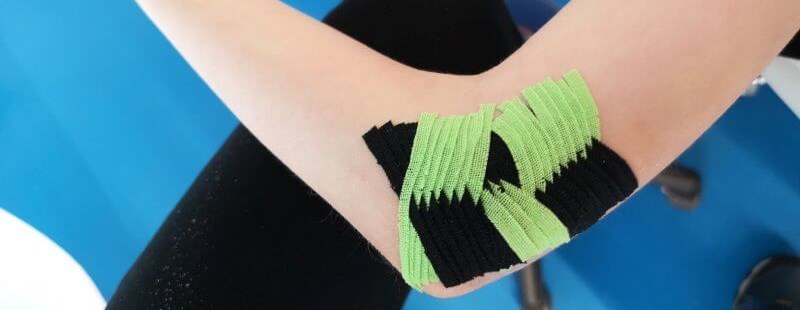
What is kinesiotaping?
Kinesiotaping, or dynamic patching, is a method of taping with special patches whose parameters, such as thickness, specific gravity and stretchability by 130-140%, are similar to those of human skin. The method was developed by Dr. Kenzo Kase in the 1970s. Its principles are based on kinesiology, the science that deals with human body movement. For years kinesiotaping was “reserved” mainly for athletes, but over the past decades the concept has evolved greatly.
Kinesiotaping has gained the recognition of physiotherapists around the world and is increasingly used for many musculoskeletal conditions. Kinesiotaping is not only a stand-alone physiotherapeutic method, but is primarily an excellent complement to other therapeutic techniques (including manual therapy, kinesitherapy and edema reduction).
How does Kinesiotaping work?
The technique achieves excellent therapeutic results through the sensory action of the patch. When applied in the right way, dynamic patches create undulations in the surface, increasing the space between the dermis and fascia. This improves microcirculation of blood, lymph and activates the self-healing process. Kinesiotaping aids muscle function by facilitating movement, corrects alignment and joint function, increases the range of motion of muscles and joints, helps in faster evacuation of hematomas and reduction of swelling, and by mechanically decompressing pain receptors in the skin and muscles (reducing pain). It is also worth noting that it is a very safe technique, as evidenced by its widespread use in pediatrics, the elderly and even pregnant women.
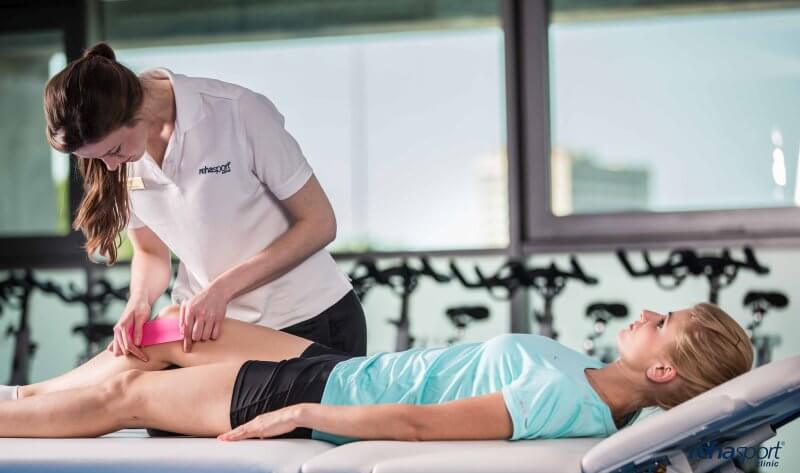
When is Kinesiotaping used?
Kinesiotaping can be used for many ailments. Indications include:
- Post-injury conditions: treatment of joint sprains and dislocations, swelling, joint instability, muscle damage, ligament damage such as Achilles tendon complaints or clubfoot.
- Musculoskeletal pain, such as back pain, knee pain, pain in the shoulder joint, tendinitis (e.g. in the wrist area), soreness of the attachment area (e.g. tennis elbow), heel spurs.
- Acceleration of healing processes after injuries and surgeries (e.g., after cruciate ligament or Achilles tendon reconstruction).
- Treatment of scars and hematomas.
- Indications for lymphatic drainage (lymphatic kinesiotaping), i.e. in disorders of lymph circulation: edema occurring due to disease, after injury or during pregnancy.
- Correction of postural defects, such as scoliosis.
- Increasing fitness, performance and improving deep sensation (proprioception), as well as reducing the risk of injury, during competitive and amateur sports.
- Treatment of some dysfunctions caused by skin and fascia receptors: balance disorders, some respiratory disorders.
Preventive application of taping
It is worth noting the protective use of taping (preventive) against the formation or aggravation of injuries. If you are involved in sports and start preparing for an event, such as a marathon, competition, skiing trip, it is worth considering, as kinesiotaping can assist us in training and protect us from the emergence of injuries.
Bibliography: