

 616281181


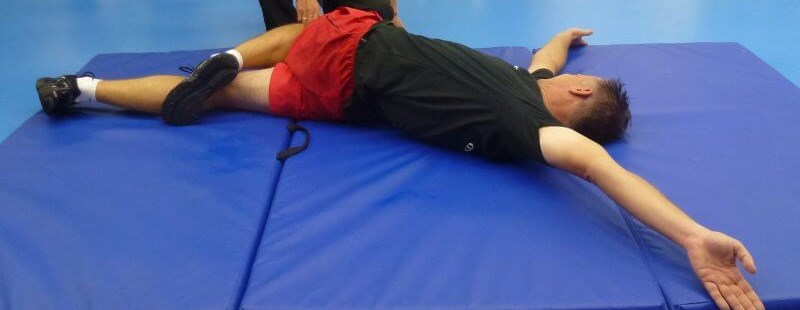
What does Kinesitherapy consist of?
Nowadays, the name kinesitherapy is used interchangeably with the term medical training.
Exercises are a very important part of rehabilitation, allowing to restore lost function in the musculoskeletal system. The set of exercises is individually tailored to the Patient, has the character of functional work, thus allowing a faster return to activity, and above all is attractive to the Patient.
Rehasport's creative team of young physiotherapists does not allow boredom in the gym, constantly raising the bar by striving with the patient to achieve the goals previously set. Kinesitherapy has a tremendous impact on the healing process including: improving overall fitness, increasing muscular endurance, improving joint mobility, and correcting abnormal movement habits.
A wide variety of exercises are used in the rehabilitation room, with the use of everything from the simplest utensils to technologically advanced instruments with biofeedback (i.e., the ability for the therapist and the Patient to monitor the current image of the exercise being performed), which are used in recognized centers around the world. In addition, the Patient is guided to the very entrance of full training loads, and if necessary can undergo an individualized program with a specialized personal trainer.
Topical kinesitherapy
Local kinesitherapy is characterized by a local effect, where exercises affect a selected dysfunction, such as a hip, operated knee or painful shoulder. Applied therapeutic exercises affect only a selected area of the body, mainly focusing on the affected limb - joint.
Systemic kinesitherapy
Systemic kinesitherapy involves the entire human body and mainly includes: aerobic exercises in the form of warm-up or cycling training, whole-body exercises - various types of stretching or strengthening exercises. In his work, the physiotherapist does not focus only on one area of the patient's body, and all elements of the human body are put into motion.
Modern kinesitherapy does not focus only on local action, but addresses the patient's entire body, its weak foci or compensatory areas. Kinesitherapy seeks to address not only the pain or injury of a particular joint as the source of symptoms or dysfunction, but also seeks and eliminates their cause.
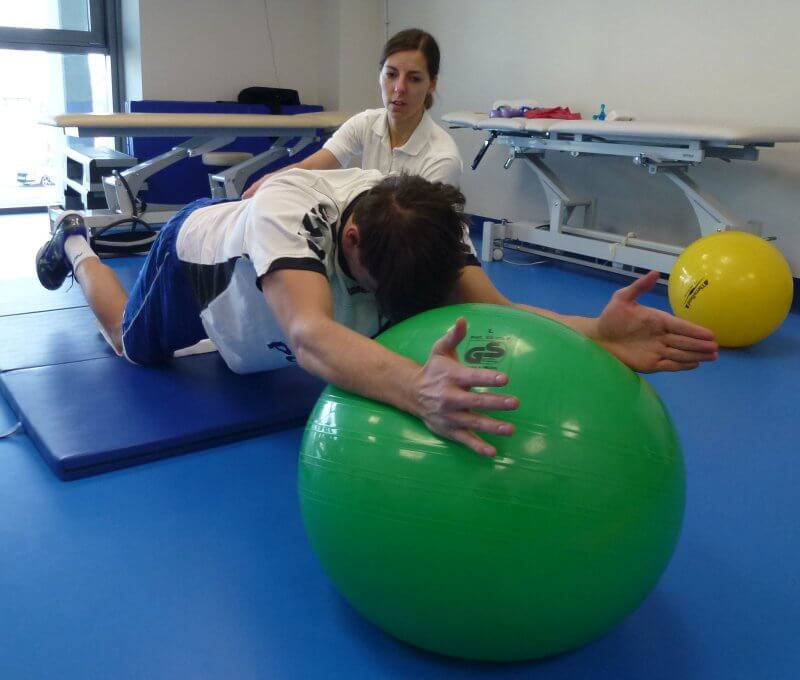
What are the indications for kinesitherapy?
- the indication for kinesitherapy may be the Patient's pain problem - it can act as an analgesic, relieving stress on a given joint,
- may act on tissues - tissue remodeling, often the phenomenon of mechanotransduction is used, that is, appropriately loading with force vectors we cause that a given tissue (ligament) acquires mechanically appropriate properties,
- increase proprioception - balance, not only in the elderly, but also after ligamentous injuries such as ankle sprain, ligament reconstruction in the knee joint.
- to improve joint sensation, to strengthen weakened parts - building the muscle corset, stabilization,
- for general conditioning of the body.
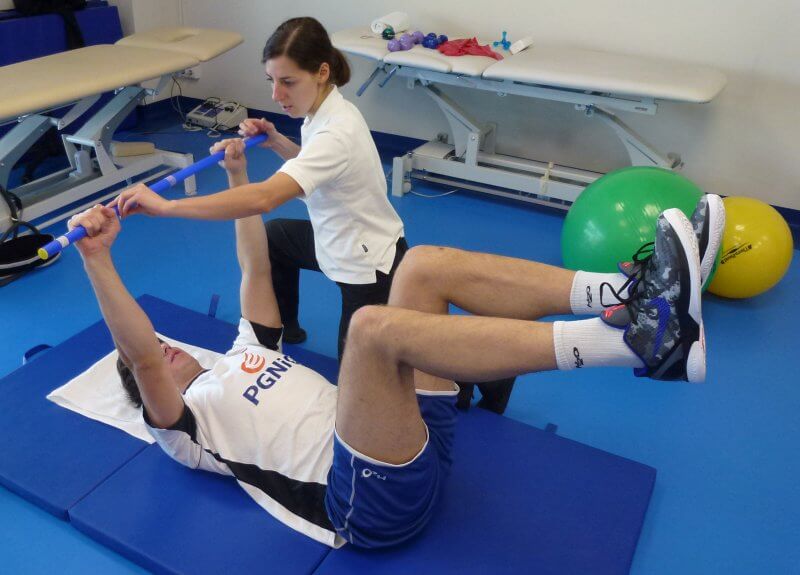
Goals of kinesitherapy
The primary goal of kinesitherapy is to help regain the Patient's total or partial mobility and restore the quality of life prior to illness or injury. The purpose of kinesitherapy is also to educate the Patient in injury prevention, ergonomics, and most importantly, to master proper movement habits.
Effects of kinesitherapy
The effects of properly selected kinesitherapy are many. These are primarily: strengthening the body, improving neuromuscular control, reducing the patient's pain, improving body stabilization, improving correct movement patterns and learning ergonomics in life and at work.
Prevention and prevention of injuries, falls, subsequent injuries and overloads is also very important, as encouraging physical activity in Patients through education that takes place during the therapy session.