

 616281181


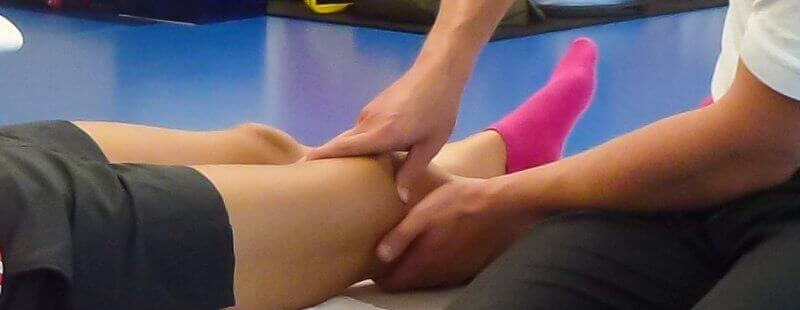
What is manual therapy?
Manual therapy is a therapeutic and diagnostic method of assisting in the treatment of musculoskeletal disorders, particularly in spinal diseases and joint degeneration. It is used in both orthopedics and rehabilitation, as well as rheumatology and neurology. Manual therapy aims to restore proper joint mobility and minimize pain. By applying pressure to appropriate points on the body, using various soft tissue therapy techniques, the physiotherapist reaches painful areas and restores muscle balance. Manual therapy can be helpful in treating joints that lack adequate mobility and range of motion. This restriction can cause discomfort, pain, altering normal posture and movement patterns. The therapist reduces muscle tension, increases muscle flexibility and restores mobility to stiff joints to restore the patient's normal movement without pain.
What are the benefits of manual therapy?
Manual therapy treatment is used wherever there is pain and restriction of movement in a joint. The fastest results are seen in the case of tissue or joint overload conditions, but also in post-surgical conditions it brilliantly accelerates and improves the functioning of the musculoskeletal system, and is invaluable in orthopedic rehabilitation.
Manual therapy has a great advantage because the treatment process is developed individually depending on the patient's condition and condition. Depending on the problem, the therapist selects treatment methods using massage, stretching, manipulation and joint mobilization, trigger point therapy, neuromobilization or soft tissue mobilization. Manual therapy is also an ideal complement to exercise and patient education.
Benefits of manual therapy:
- reduces pain
- increases joint mobility and range of motion
- improves flexibility and mobility of tissues
- reduces inflammation of soft tissues
- reduces muscle tension
Effectiveness of manual therapy
Manual therapy encompasses a large range of diagnostic and therapeutic techniques, but it should only be performed by trained professionals to produce satisfactory results. A manual therapist is a highly qualified person who is able to properly diagnose and treat disorders and post-traumatic conditions. Achieving the desired results - reducing pain and increasing the range of joint mobility, is possible only when treatments are performed regularly.
Indications for manual therapy:
- muscle pains
- various types of diseases and pain in the spine
- sciatica
- chronic headaches and neck pain
- migraine pains
- joint pain in the upper and lower extremities
- shoulder sciatica
- tissue overload conditions
- postural defects
- muscle tension disorders in the pelvic region
- sleep disorders
- numbness of the limbs and fingers
- tensions resulting from stress and fatigue
- frequent urination
What techniques are used in manual therapy?
Manual therapy - FDM - (Fascial Dystorsion Model) - a concept of work based on fascial distorsions (disorders). The creators distinguish 7 main fascial distorsions, which are characterized by a specific mechanism of formation (trauma, overload) and the so-called “body language”, which is a specific display on the body of the place of pain or disorder. After a thorough analysis of the patient's history, the therapist proceeds to therapy, which can be painful for 3 of the 7 distortions, but at the same time is extremely effective, immediately reducing the patient's pain or increasing the range of motion in the joint by up to 70% during the very first therapy.
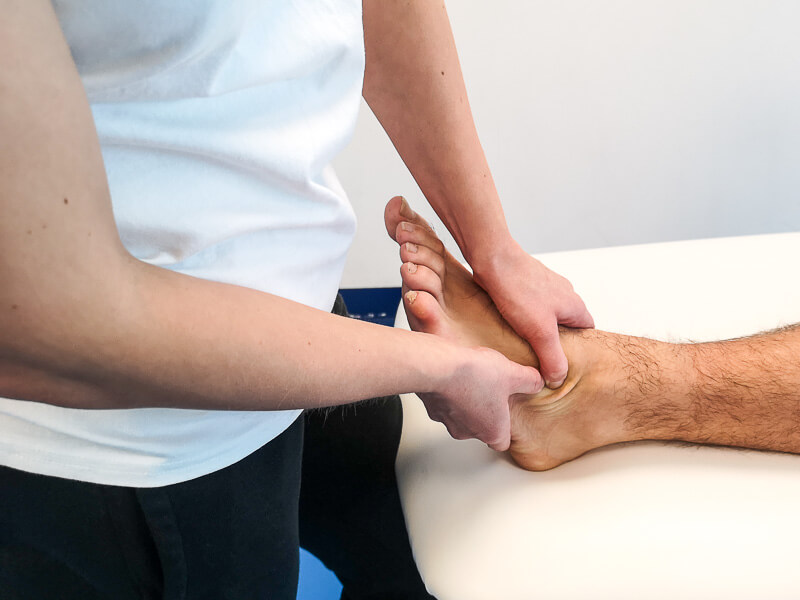
Manual Therapy - Soft Tissue Therapy - Soft tissue techniques are a variety of therapeutic actions (including Muscle Energization Techniques - MET, Muscle-Fascia Relaxation - MFR, Active Relaxation Techniques - ATR, Positional Relaxation - PR) applied by the therapist on muscles, fascia, but also affecting the adjacent joints or nervous system. Thanks to the variety of techniques in manual therapy, the physiotherapist has the opportunity to select the appropriate therapeutic agent for the current state of the patient, regardless of whether he or she is in an acute, subacute or chronic condition. Working on soft tissues uses elements of deep massage, stretching, relaxing areas of increased tension. By normalizing tensions in the body, we give the body a chance to improve movement patterns, thereby increasing ergonomics of movement. This avoids a lot of overload, which is what leads to more serious injuries.
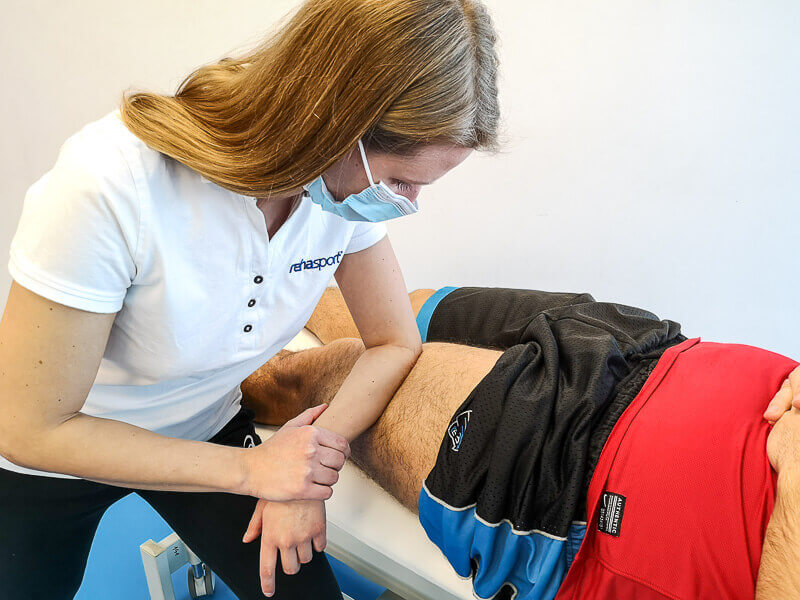
Manual therapy - Kaltenborn Method - or Kaltenborn-Evjenth orthopedic manual therapy, which applies diagnostic and therapeutic manual techniques to the spine, peripheral joints, muscles and nerve tissue. The Kaltenborn method consists of diagnostics that allow the selection of the best method of therapy to fit the needs: soft tissue mobilization technique, joint mobilization technique, nerve tissue mobilization technique, exercises to improve joint and soft tissue mobility.
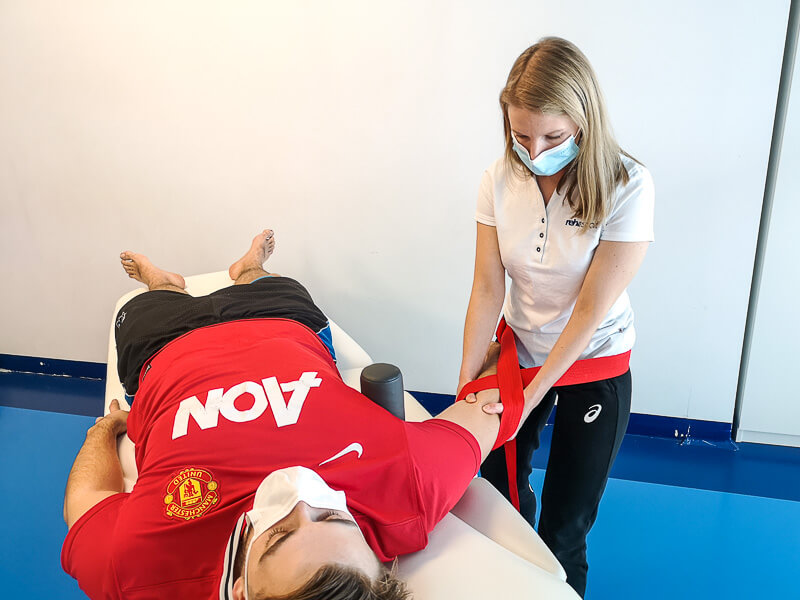
Manual therapy - Maitland Method - consists of examination, therapy and evaluation. Characteristic of this method is the great minuteness of the examination, consisting of subjective and objective parts. During manual therapy, after applying a given technique, the physiotherapist evaluates the progress of therapy by re-examining the patient. Thus, he checks whether the patient is still in pain and whether mobility in the joints has increased. The patient's feedback is a guideline for further treatment. The Maitland method uses mobilization - passive and rhythmic oscillations within the currently possible range of motion, and manipulation - sudden and rapid movements that exceed the currently possible range of motion.
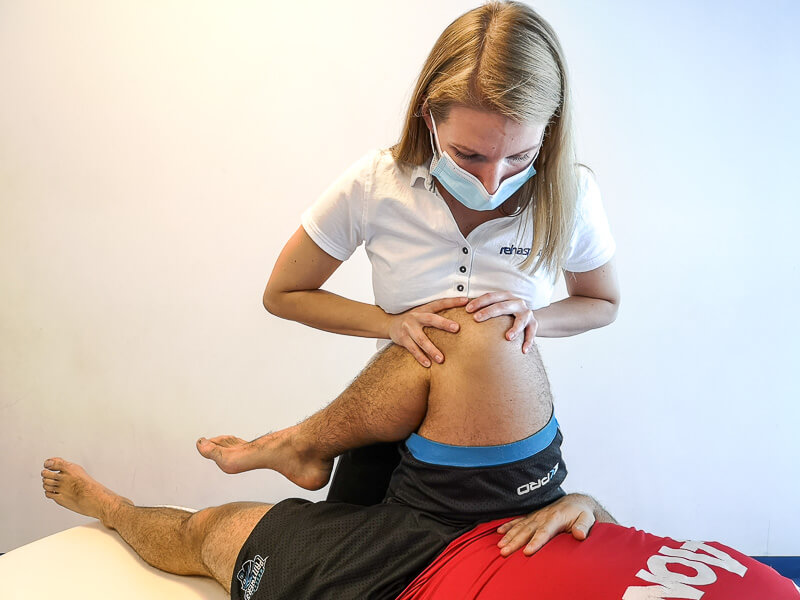
Manual therapy techniques are presented by Estera Pawlak, MA.
The course of manual therapy?
Manual therapy, depending on the type of ailment, may look slightly different for different patients. Very important is the history and initial examination to identify the problem and qualify the patient for the appropriate type of treatment. The physiotherapist usually works with the patient, who is in a supine position on the couch. Working on the soft tissues, he or she applies pressure to the soft tissues of the body in an effort to relax them and relieve pain. During manual therapy, mobilization or manipulation is also possible, which uses movements of varying speed and amplitude to help loosen tight tissues around a joint, reduce pain and give them more flexibility. During the visit, the physiotherapist may also instruct the patient on how he or she can prevent pain with daily activities and prescribe appropriate exercises to perform at home.
Contraindications to manual therapy
No therapeutic method, including manual therapy, is a presc.ription for all pain. Although manual therapy is a fairly effective and safe method, it cannot be performed on all patients. There are several contraindications to its use such as: weakened bone structure - bone fractures and breaks or advanced osteoporosis. People with blood clotting problems and pregnant women should not go for manual therapy.