


 616281181


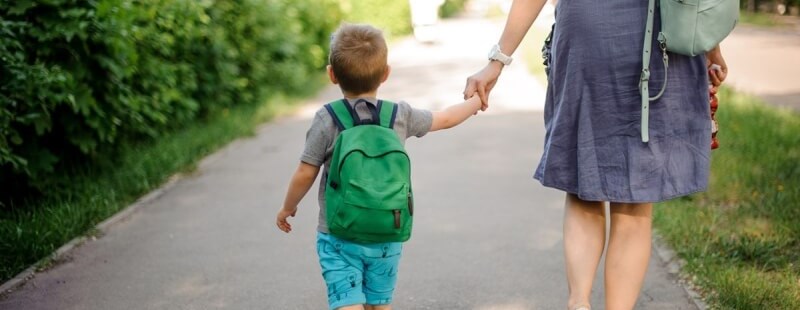
As a new school year begins, many parents of primary school students decide to purchase new backpacks — looking for ones that are roomier or simply new. But what should an ideal backpack be like, and what should we pay attention to? Dr. Paweł Bąkowski, orthopedic specialist at Rehasport, explains.
What does the ideal school backpack look like from an orthopedic point of view?
— The most important thing is that the weight of the backpack, including its contents, should not exceed 10 percent of the child’s body weight. In other words, if a child weighs 30 kg, the backpack should weigh no more than 3 kg in total. This is scientifically confirmed — in March of this year, a study published in a respected orthopedic journal reached precisely this conclusion. If the total backpack weight exceeds 10 percent of the child’s weight, it can lead to postural issues, as well as headaches, neck pain, and back pain. The negative effects of overly heavy backpacks are clear.
Is it realistic to meet this “10 percent” rule in Poland?
— In our country, there’s a regulation — I believe issued by the Minister of Education — stating that a backpack must not exceed 15 percent of a child’s body weight. Unfortunately, this rule is not enforced in schools. According to research from the Central Statistical Office, in the vast majority of cases, backpacks are significantly heavier.
So we should weigh our children’s backpacks and act if they’re too heavy?
— Yes, from my perspective — not only as a doctor but also as a parent — that’s a basic responsibility. If it’s too heavy, remove unnecessary items or leave some materials at school. Many schools already allow students to leave textbooks there.
And if the backpack is still too heavy and nothing can be removed, should we take it up with teachers or the school principal? Should we act when it exceeds 10 percent or only after it passes 15 percent?
— If smoking is proven harmful, we recommend not smoking. If it’s been proven that backpacks heavier than 10 percent of a child’s weight are harmful, we must act as soon as that threshold is crossed. We can’t adjust global health guidelines to local conditions just because “things are different here.” If the backpack is too heavy, go talk to the school — and in the meantime, help your child carry it.
Does the backpack’s position on the back matter too?
— Yes, it must be properly positioned. It shouldn’t sit too high or too low, as this can cause posture issues. Ideally, the top of the backpack should be at shoulder blade level — more precisely, halfway along the interscapular section of the back. If it’s too high, the neck suffers; if it’s too low, the pelvis and lower back are affected. And don’t forget the straps — check that they’re not too narrow or too wide. Children’s bodies are more susceptible to deformation than adults’, so we need to make sure the straps don’t dig into the shoulders or press against the neck.
Could a wheeled backpack be the solution?
— In a perfect world, wheeled backpacks aren't ideal because they require pulling, which causes a twisting posture — and they often need to be lifted. From an ergonomic standpoint, a backpack should be symmetrical and ideally pushed, not pulled. However, in Polish conditions, if the choice is between carrying a heavy backpack or pulling it, then pulling is the better option. That said, we shouldn’t look for shortcuts. First, review the contents and see what can be removed. If it’s truly impossible to reduce the weight, then yes — a wheeled backpack is the better choice.
Should we also pay attention to the stiffness of the backpack and its back panel?
— For younger children, a stiffer backpack is better than a soft, flexible one — the stiffer it is, the easier it is to distribute the contents evenly. However, in general, this isn’t a critical factor.
Interview by: Andrzej Grupa

